
BS Computer Science (Graduation with Merit / Cum Laude)
Relevant Coursework: Networks and Systems, Data Structures/Algorithms, Software Engineering, Operating Systems, Databases, AI & ML, Natural Language Processing.
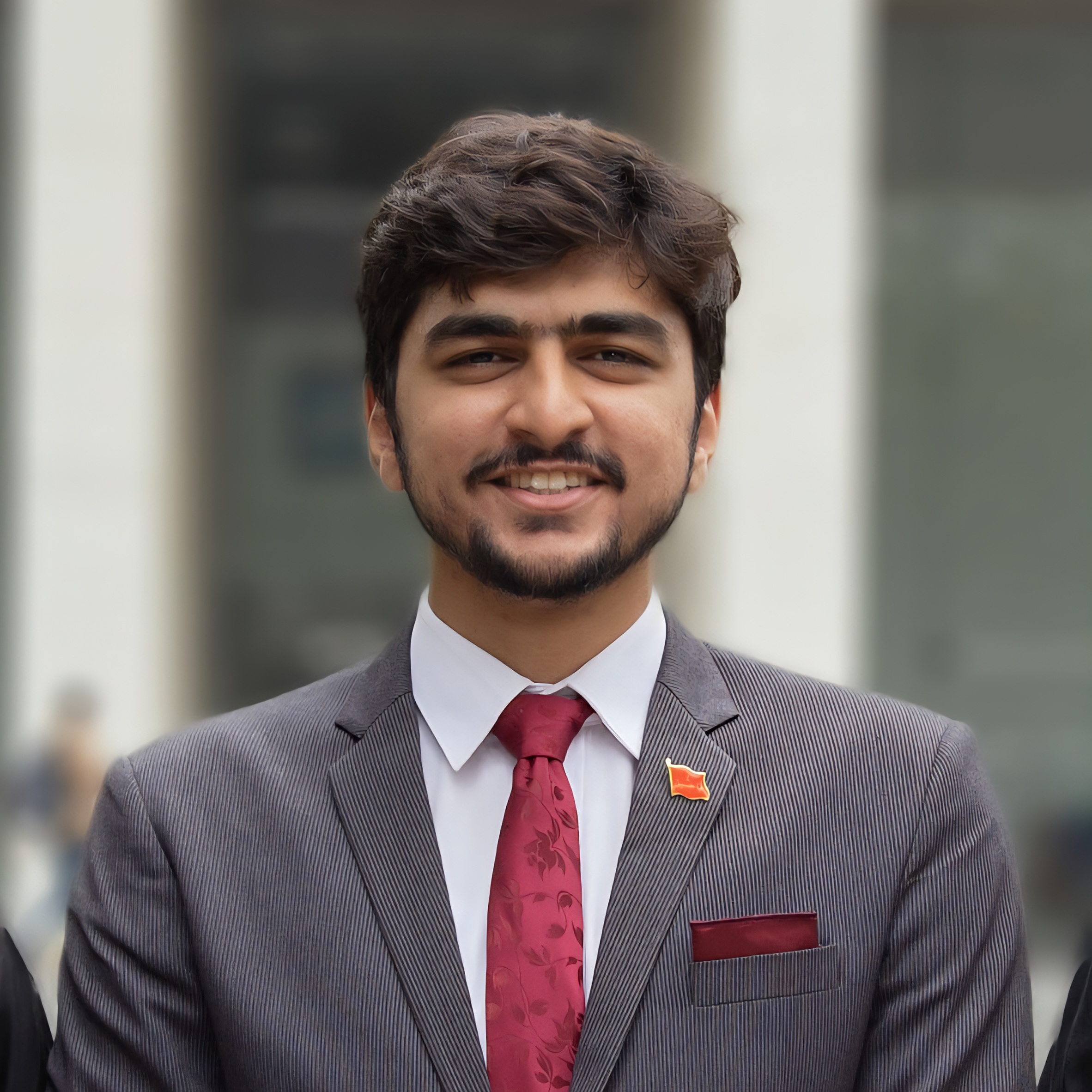
Computer Science Researcher | Transport Protocols & Networked Systems
Karachi, Pakistan
Download CVComputer Science researcher and LUMS alumnus specializing in transport protocols and networked systems, with applications in distributed AI governance and interactive media. Sole author of an IEEE-published transport paper and public preprints on mixed-criticality transport and decentralized consensus. Current work has two parallel strands: implementing and evaluating the CATS priority mechanism over QUIC, and abstracting questions exposed by the TCP and QUIC studies into cross-protocol work on service guarantees, network calculus, and online scheduling under shared ordering, admission, and congestion-control state.
Transport Protocols, Congestion Control, Network Scheduling and Performance, Distributed Systems, Network Calculus, and Interactive Networked Applications.
Relevant Coursework: Networks and Systems, Data Structures/Algorithms, Software Engineering, Operating Systems, Databases, AI & ML, Natural Language Processing.
S. M. A. Rizvi. “Single-Connection Mixed-Criticality Transport with CATS: Bounded Guarantees, Three Structural Limits, and a QUIC Escape.” Preprint.
S. M. A. Rizvi. “The Cognitive Penalty: Ablating System 1 and System 2 Reasoning in Edge-Native SLMs for Decentralized Consensus.” Preprint.
S. M. A. Rizvi. “A Case for CATS: A Conductor-driven Asymmetric Transport Scheme for Semantic Prioritization.” Proceedings of the 6th International Conference on Innovative Computing (ICIC 2025). Published in IEEE Xplore.
S. M. A. Rizvi. “A Literature Review of Keyword Spotting Technologies for Urdu.” Technical Report.
S. M. A. Rizvi. “Interactive Semantic Video Seeking—ISVS: A Proposed Architecture and Research Roadmap for Non-Linear Media Navigation.” Research Proposal.
Independent research centered on transport protocols, service guarantees, network scheduling, and adjacent distributed/interactive systems questions.